Table Of Content
We will also notice that tests are only carried out at the end of the semester, and not at the beginning. Some examples of quasi-experimental research design include; the time series, no equivalent control group design, and the counterbalanced design. In this type of experimental study, only one dependent group or variable is considered. The study is carried out after some treatment which was presumed to cause change, making it a posttest study. Observational studies are those where the researcher is documenting a naturally occurring relationship between the exposure and the outcome that he/she is studying.
What is a good experimental design?
Furthermore, the paper discusses the timing of pre-tests and post-tests, the intricacies of experiment design, and emerging trends such as internet-based experiments and ex post facto research. Through a comprehensive examination of experimental research methodologies, designs, and applications, this paper aims to provide researchers with a nuanced understanding of experimental inquiry across diverse academic domains. Research designs are broadly divided into observational studies (i.e. cross-sectional; case-control and cohort studies) and experimental studies (randomised control trials, RCTs). Each design has a specific role, and each has both advantages and disadvantages. Moreover, while the typical RCT is a parallel group design, there are now many variants to consider. It is important that both researchers and paediatricians are aware of the role of each study design, their respective pros and cons, and the inherent risk of bias with each design.
Why Use Experimental Research Design?
It has relevant features that will aid the data collection process and can also be used in other aspects of experimental research. This is very common in educational research, where administrators are unwilling to allow the random selection of students for experimental samples. In a static-group comparison study, 2 or more groups are placed under observation, where only one of the groups is subjected to some treatment while the other groups are held static.
Limitations of Experimental Design
The experimental results can provide a certain theoretical basis for the design of cockpit lighting environment. The independent variables are the experimental treatment being exerted on the dependent variables. Extraneous variables, on the other hand, are other factors affecting the experiment that may also contribute to the change.
The researcher does not do any active intervention in any individual, and the exposure has already been decided naturally or by some other factor. For example, looking at the incidence of lung cancer in smokers versus nonsmokers, or comparing the antenatal dietary habits of mothers with normal and low-birth babies. In these studies, the investigator did not play any role in determining the smoking or dietary habit in individuals. A variable represents a measurable attribute that varies across study units, for example, individual participants in a study, or at times even when measured in an individual person over time.
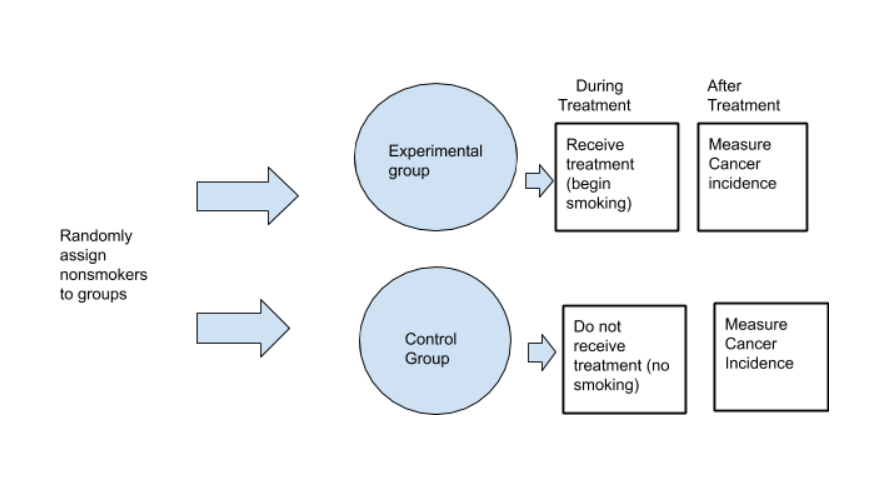
Experimental design is a powerful tool for advancing scientific knowledge and informing evidence-based practice in various fields, including psychology, biology, medicine, engineering, and social sciences. Experimental design is a process of planning and conducting scientific experiments to investigate a hypothesis or research question. It involves carefully designing an experiment that can test the hypothesis, and controlling for other variables that may influence the results. Typically, the researcher designs the treatment and randomly assigns subjects to control and treatment groups.
Experimental Research: What it is + Types of designs
When you have a clear idea of how to carry out your experiment, you can determine how to assemble test groups for an accurate study. Depending on your experiment, your variable may be a fixed stimulus (like a medical treatment) or a variable stimulus (like a period during which an activity occurs). Researchers perform a test at the end of the experiment to observe the stimuli exposure results. Random selection removes any potential for bias, providing more reliable results.
RELATED ARTICLES
LinkedIn Ran Social Experiments on 20 Million Users Over Five Years (Published 2022) - The New York Times
LinkedIn Ran Social Experiments on 20 Million Users Over Five Years (Published .
Posted: Wed, 21 Jun 2023 07:00:00 GMT [source]
Researchers should state and reference the statistical package and procedure(s) within the package used to compute the statistics. “Statistical Design” or, preferably, “Statistical Analysis” or “Data Analysis” should be the last subsection of the “Methods” section. It directs the experiment by orchestrating data collection, defines the statistical analysis of the resultant data, and guides the interpretation of the results.

No matter the kind of absurd behavior that is exhibited by the subject during this period, its condition will not be changed. Experimental research design can be majorly used in physical sciences, social sciences, education, and psychology. The choice of setting used in research depends on the nature of the experiment being carried out. However, this may be influenced by factors like the natural sweetness of a student. For example, a very smart student will grab more easily than his or her peers irrespective of the method of teaching.
Next is a paragraph detailing who the participants were and how they were selected, placed into groups, and assigned to a particular treatment order, if the experiment was a repeated-measures design. And although not a part of the design per se, a statement about obtaining written informed consent from participants and institutional review board approval is usually included in this subsection. Thus, while designing a study it is important to take measure to limit bias as much as possible so that the scientific validity of the study results is preserved to its maximum. Regression analysis is used to model the relationship between two or more variables in order to determine the strength and direction of the relationship. There are several types of regression analysis, including linear regression, logistic regression, and multiple regression. Inferential statistics are used to make inferences or generalizations about a larger population based on the data collected in the study.
This should be done by random allocation, ensuring that each participant has an equal chance of being assigned to one group. Experimental research design lay the foundation of a research and structures the research to establish quality decision making process. The research problem statement must be clear and to do that, you must set the framework for the development of research questions that address the core problems. Without a comprehensive research literature review, it is difficult to identify and fill the knowledge and information gaps. Furthermore, you need to clearly state how your research will contribute to the research field, either by adding value to the pertinent literature or challenging previous findings and assumptions. There is no order to this list, and any one of these issues can seriously compromise the quality of your research.
The variable the experimenter manipulates (i.e., changes) is assumed to have a direct effect on the dependent variable. To assess the difference in reading comprehension between 7 and 9-year-olds, a researcher recruited each group from a local primary school. They were given the same passage of text to read and then asked a series of questions to assess their understanding. We expect the participants to learn better in “no noise” because of order effects, such as practice. Repeated Measures design is also known as within-groups or within-subjects design. Usually, researchers miss out on checking if their hypothesis is logical to be tested.
These do not try to answer questions or establish relationships between variables. Examples of descriptive studies include case reports, case series, and cross-sectional surveys (please note that cross-sectional surveys may be analytical studies as well – this will be discussed in the next article in this series). Examples of descriptive studies include a survey of dietary habits among pregnant women or a case series of patients with an unusual reaction to a drug. In a within-subjects design (also known as a repeated measures design), every individual receives each of the experimental treatments consecutively, and their responses to each treatment are measured. You manipulate one or more independent variables and measure their effect on one or more dependent variables.